
There is a kind of grief no one prepares you for. It is this grief that has haunted me for years. I never knew what to call it or if it really existed.
This grief doesn’t come with casseroles or sympathy cards. It doesn’t always have a clear beginning or end. And often, it goes unnamed.
It’s the grief of the life you thought you would have.
The body you assumed would always cooperate.
The marriage you believed would feel lighter with time.
The financial stability you worked hard for and still lost.
The version of yourself who imagined freedom, ease, or certainty by now.
I know this grief intimately. It has been my steady companion for some time now.
Chronic illness rewrote my relationship with my body.
A kidney transplant changed the trajectory of my life.
Caring for a spouse with heart disease reshaped my marriage and my identity.
Raising children while navigating medical trauma and financial instability forced me to grow in ways I never planned.
And through it all, there was a quiet, persistent mourning—not just for what I lost, but for what I expected.
Naming the Grief We’re Afraid to Admit
We don’t talk enough about grieving futures that never arrived.
We minimize it.
We tell ourselves to be grateful.
We compare our pain to others who “have it worse.”
But grief doesn’t need permission to exist.
You can be grateful and grieving.
You can love your family and mourn the life you thought you’d be living alongside them.
You can be strong and deeply tired.
What we are often grieving isn’t just circumstances—it’s identity.
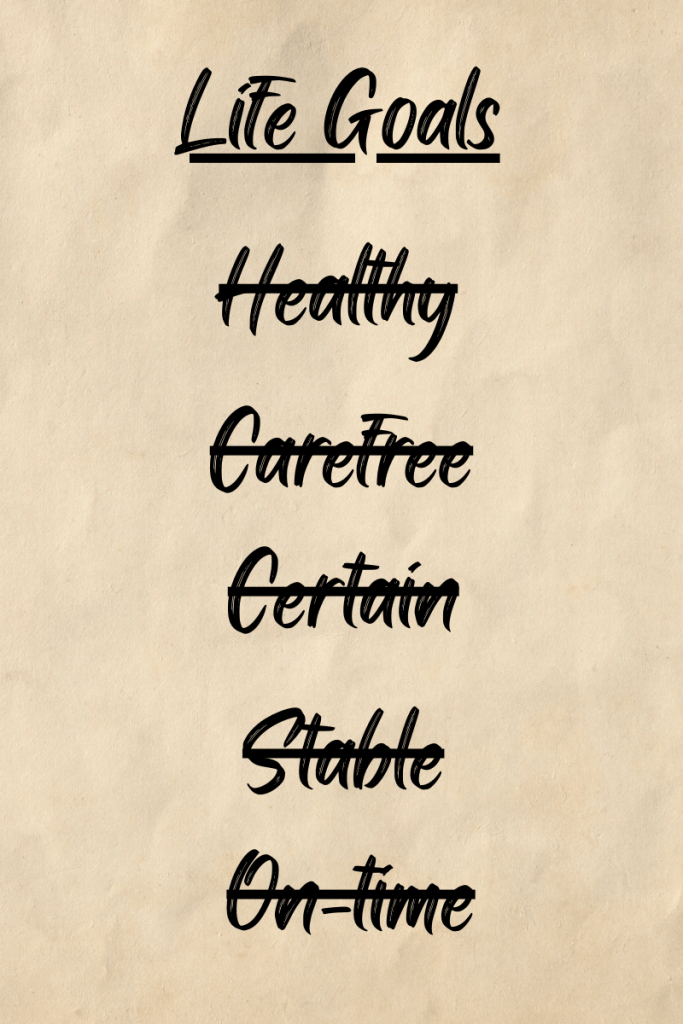
Who I thought I would be by now.
How I imagined my energy, my marriage, my sense of self.
The woman who didn’t yet know how hard she’d have to fight.
And this is where my Gladiator philosophy was born.
Because at some point, I realized something fundamental:
There was nowhere I could go to escape my problems. You simply can’t outrun your life. And no one is coming to save you. You have to be your own hero.
You are a gladiator.
And gladiators don’t run from grief.
They face it.
They name it.
They bleed if they must—they heal and rise again.
2025: The Year of the Snake — The Sacred Work of Letting Go
In many traditions, 2025 is symbolized as the Year of the Snake—a year of shedding, release, and rebirth.
Snakes don’t carry old skin into new seasons.
They shed it—completely.
And this past year has felt exactly like that for me. It has been a year of mourning, a year of releasing, and a year of redefining myself.
Letting go of who I thought I needed to be to survive.
Letting go of timelines that no longer make sense.
Letting go of identities shaped purely by survival mode: patient, caregiver, fixer, strong one.
The Year of the Snake asks us to do something uncomfortable but necessary:
👉 Release the version of yourself that no longer fits.
Not because she failed—but because she carried you as far as she could.
In this season, grief becomes an initiation.
A stripping away.
A reckoning with truth.
For me, this meant allowing myself to mourn without rushing to “fix” it.
Writing goodbye letters to expectations I had clung to for decades.
Acknowledging that the old life was gone—and that pretending otherwise was costing me my peace.
This is not weakness.
This is wisdom.
The Space Between: Where Gladiators Are Forged
After the shedding, there is a pause.
An in-between space where the old skin is gone, but the new one hasn’t fully formed. This is an uncomfortable space, where identity is unknown. You are not the person you used to be, but you don’t really know who you are becoming yet.
This is where many people panic. They rush to rebuild. They force positivity. They try to outrun the emptiness.
But gladiators understand something different.
This space is sacred.
It’s where clarity forms.
It’s where you learn who you are without the armor you once needed.
It’s where grief softens into truth.
You don’t heal by going back.
You heal by staying present long enough to let something new emerge. Be patient with yourself and with the process.
2026: The Year of the Fire Horse — Rising With Intention
If 2025 is about release, 2026—the Year of the Fire Horse—is about movement.
The Fire Horse symbolizes:
- Courage
- Independence
- Momentum
- Life force reclaimed
This isn’t reckless energy. It’s earned power.
You don’t enter a Fire Horse year as the same person you were before the grief. You enter it wiser. Clearer. More discerning.
For me, 2026 isn’t about pretending the past didn’t happen.

It’s about riding forward with it.
With scars that taught me boundaries.
With losses that clarified what matters.
With resilience forged through illness, motherhood, and survival.
This is where the Gladiator Life truly begins—not in the fight itself, but in the choice to live fully after it.
You Are Not Going Back — And That Is the Point
One of the hardest truths to accept is this:
You are not meant to return to who you were before.
There is no return. The experiences and lessons you have learned have fundamentally changed who you are. You are meant to become someone truer.
Grief refines you.
It burns away illusions.
It strips life down to what’s essential.
And when you finally stop trying to resurrect the old dream, you gain the power to build a new one—on your terms.

This is the life of a gladiator.
You fight when you must.
You rest when you’re wounded.
You stitch yourself back together with intention.
And when the gates open again, you step forward—not because you aren’t afraid, but because you are ready.
An Invitation
If you are grieving the life you thought you’d have, know this:

Let 2025 be the year you release what no longer fits.
Let 2026 be the year you move with courage, clarity, and fire.
You are a gladiator.
And this next chapter is yours to claim.
From one woman who refused to run,
Tenia | Gladiator Life

 Gladiator Women
Leave a comment