
Hi, my name is Tenia and I am an overthinker. I have the gift of taking a simple, single thought and turning it into a catastrophic event, all taking place within my mind. Outwardly, I am withdrawn, moody, sometimes angry, and almost always hard to live with during these episodes of overthinking.
Oftentimes it is triggered by something someone says or a difficult situation I am trying to navigate. Then my thoughts become like a runaway train, jumping from track to track at high speed barreling towards the broken track over the ravine. I get lost in my mind and this leads to feelings of anxiety and depression. The longer my overthinking continues, the worse I feel about myself. It leaves me questioning everything; the past, the present, and the future. I wonder if I made the right choices. If I did things differently, would I be happier? Will I ever have the life I want? Will I ever be happy?
I sat down to write this blog, but kept coming up blank. I couldn’t think of anything to say. I have been struggling with overthinking this week. And this led to a bout with depression, lack of motivation, and an ambivalent attitude. So I thought I would be transparent about my struggle and write about it. I know there are other overthinkers out there who go through the same thing. You are not alone.
Overthinking is a common mental habit that can lead to anxiety and depression if left unchecked. It feels like an endless cycle of self-doubt. I have struggled with this all my life, but there are times it is worse. I am tired of being controlled by my thoughts. I am tired of doubting myself. I am ready to overcome this challenge. So I started researching ways to combat overthinking. But before I get into those, let’s look at ways overthinking affects your mental health.
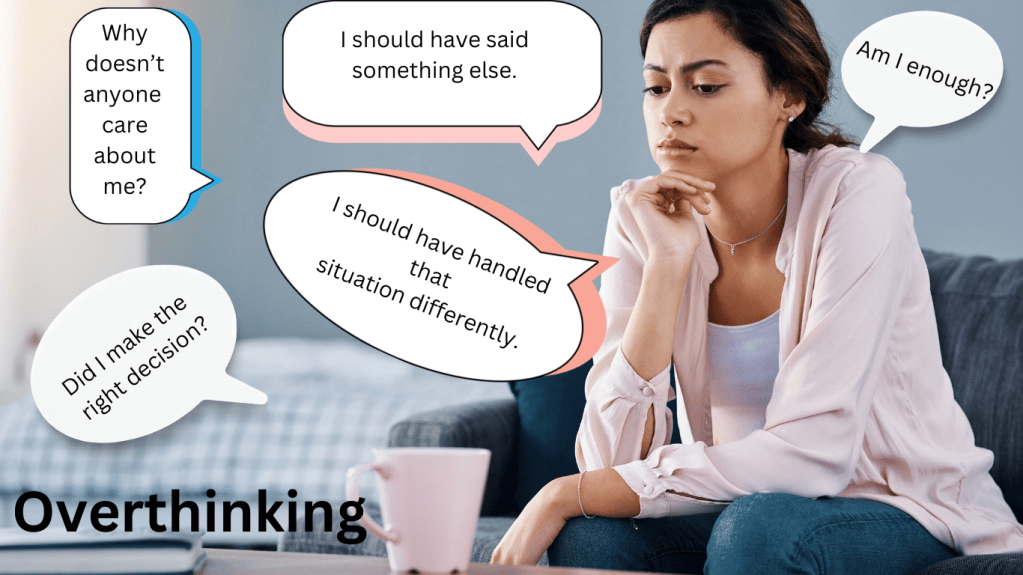
How Overthinking Fuels Anxiety and Depression
- Creates a Negative Thought Loop – Overthinking often involves replaying past mistakes or worrying excessively about the future. This repetitive pattern reinforces negative emotions, making it harder to see solutions or move forward.
- Heightens Anxiety – When we overanalyze every possible outcome, our brains enter a state of hyper-vigilance, leading to chronic stress and anxiety.
- Leads to Decision Paralysis – Overthinkers often struggle with decision-making, fearing the wrong choice could lead to disaster. This hesitation can result in missed opportunities and self-doubt.
- Increases Self-Criticism – Over analyzing situations can make you overly critical of yourself, feeding feelings of inadequacy and depression.
- Disrupts Sleep and Daily Functioning – Persistent overthinking can lead to insomnia, fatigue, and difficulty focusing, all of which contribute to mental health struggles.

I can relate to all of these. When I overthink, I am constantly replaying events, conversations, or decisions in my head. It creates a fog that I cannot see through. It paralyzes me. And the feelings of self-doubt and inadequacy just thicken the fog. Most days I just want to curl up into a ball and wait for it to pass. But fog doesn’t dissipate on its own; it takes sunlight to warm up the air. So what is the “sunlight” that breaks through the fog of our thoughts? Let’s explore some practical strategies to use when overthinking.
Practical Strategies to Overcome Overthinking
- Practice Mindfulness– Mindfulness helps you focus on the present moment rather than getting lost in worries about the past or future. Techniques like deep breathing, guided meditation, or simply observing your surroundings can help bring your mind back to the now.
- Challenge Your Thoughts– Ask yourself: Is this thought true? Is it helpful? Often, overthinking magnifies fears that aren’t rooted in reality. Writing down your thoughts and countering them with logical responses can help break the cycle.
- Set Time Limits for Reflection– Give yourself a specific time (e.g., 10-15 minutes) to think about a problem, then make a decision and move on. This prevents endless rumination.
- Engage in Physical Activity– Exercise releases endorphins, which improve mood and reduce stress. Activities like walking, yoga, or dancing can shift your focus away from overthinking.
- Use the 5-4-3-2-1 Grounding Technique– This helps interrupt anxious thoughts by engaging your senses:
- 5 things you can see
- 4 things you can touch
- 3 things you can hear
- 2 things you can smell
- 1 thing you can taste
- Keep a Journal– Writing down your thoughts can help process emotions and bring clarity. It also allows you to track patterns and recognize triggers.
- Focus on Solutions, Not Problems– Instead of dwelling on what went wrong, ask yourself: What can I do about this? Redirecting your energy towards problem-solving can empower you to take action instead of ruminating.
- Limit Information Overload- Too much information can fuel overthinking, especially when making decisions. Set boundaries on how much research or social media scrolling you do.
- Practice Self-Compassion– Be kind to yourself. Acknowledge that everyone makes mistakes and that perfection isn’t possible. Self-criticism only fuels anxiety—self-compassion fosters resilience.
- Seek Support When Needed– If overthinking is significantly impacting your life, talking to a therapist or counselor can provide helpful coping strategies and a fresh perspective.
Which of these strategies will you use? Practicing mindfulness is something I am working on. Writing down my thoughts and challenging them is a new step for me. There is something about writing things down on paper and getting them out of your head that gives you clarity. I am my own worst critic, so practicing self-compassion needs to be a part of my routine. These are the strategies that I have chosen to combat overthinking. Hopefully, there are some you can implement in your own life.
Overthinking can be exhausting, but it doesn’t have to control your life. By recognizing the patterns, challenging negative thoughts, and adopting practical strategies, you can reclaim your peace of mind. The goal isn’t to eliminate thinking but to develop a healthier relationship with your thoughts. Remember, you have the power to break free from overthinking and embrace a more present, joyful life. Until next time.
Warmest Brews,
Tenia

 Gladiator Women
Leave a comment